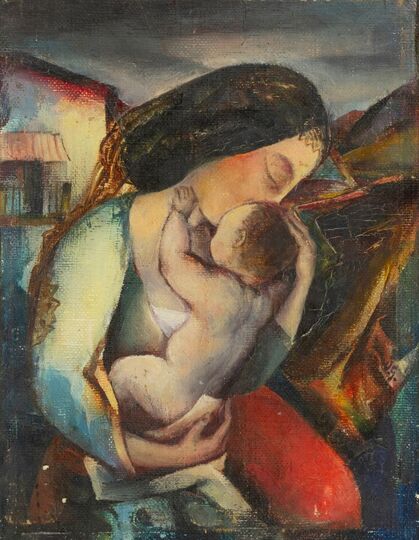
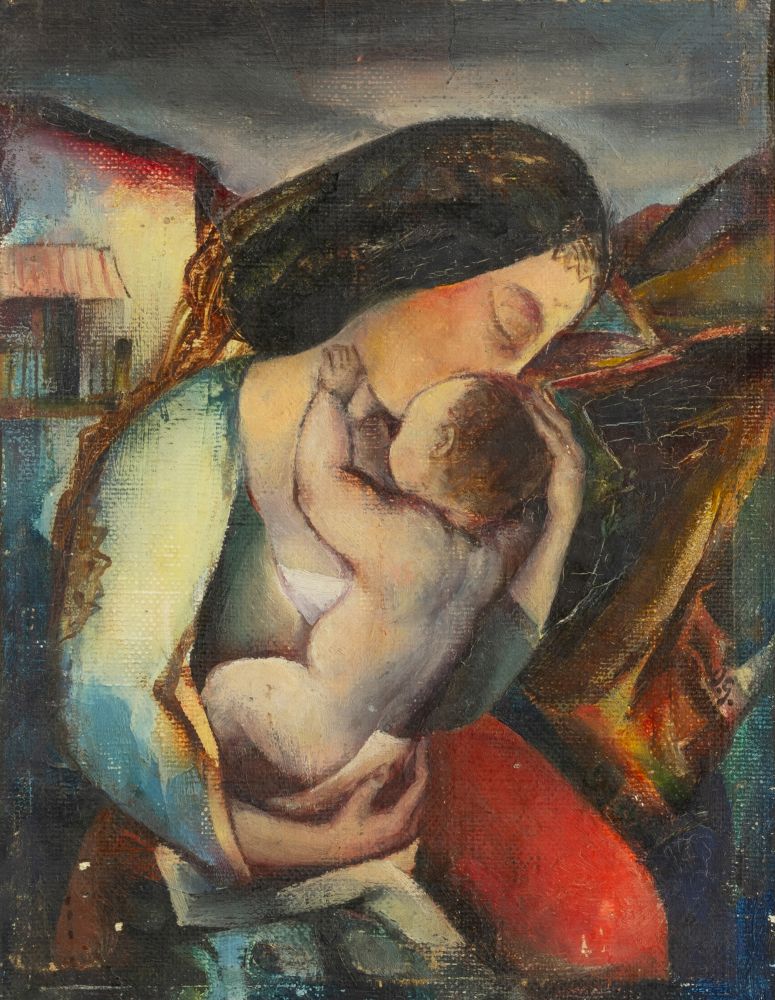
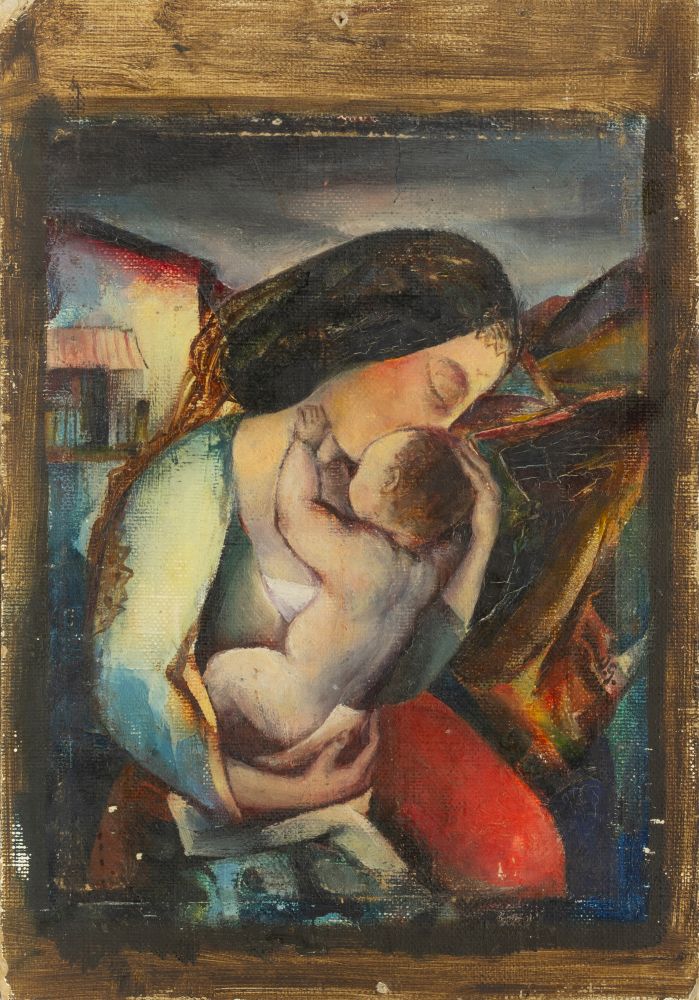
Mother and Child
Oskar Gawell (Chawlodno 1888 - Wien 1955)
Lot-No. 37
Starting Bid: 1.200 €
Around 1935. Oil/artist's board. 32 x 22 cm. Unframed. On the reverse signed O. Gawell Berlin. Rubbings. - Provenance: From the artist’s studio prior to 1941; from the collection of the seller’s mother, who was a friend of the artist; thence by descent - An Austrian painter of Polish origin. G. studied at the academies in Breslau and Weimar under Lovis Corinth, among others, and became friends with Oskar Kokoschka and Marc Chagall. Starting in the 1920s, he painted repeatedly on the Curonian Spit, but also undertook study trips to the Netherlands, Finland, Italy, and Spain. In 1926, he received the Dürer Prize from the City of Nuremberg; the following year, he exhibited alongside Erich Heckel and Karl Schmidt-Rottluff. He contributed to the Secession exhibition in Berlin until 1937; in 1941, he moved to Vienna, where he became a professor in 1949. His lyrical landscapes and figures follow in the tradition of the 'Brücke' school of painting, though they are more restrained in color. Mus.: Berlin (Nat. Gall.), Vienna (Albertina), Hamburg, Darmstadt (Mathildenhöhe), Prague. Lit.: AKL, Vollmer a. others.
Oskar Gawell: Mother and Child
Oskar Gawell (Chawlodno 1888 - Wien 1955)
Mother and Child
Lot-No. 37
After sale
Starting Bid: 1.200 €
Place bid Save artist Print Request details
| Date: | Around 1935 |
| Technique: | Oil/artist's board |
| Dimensions: | 32 x 22 cm |
| Frame: | Unframed |
| Mark/Notation: | On the reverse signed O. Gawell Berlin |
| Condition: | Rubbings |
| Provenance: | From the artist’s studio prior to 1941; from the collection of the seller’s mother, who was a friend of the artist; thence by descent |
Vita:
An Austrian painter of Polish origin. G. studied at the academies in Breslau and Weimar under Lovis Corinth, among others, and became friends with Oskar Kokoschka and Marc Chagall. Starting in the 1920s, he painted repeatedly on the Curonian Spit, but also undertook study trips to the Netherlands, Finland, Italy, and Spain. In 1926, he received the Dürer Prize from the City of Nuremberg; the following year, he exhibited alongside Erich Heckel and Karl Schmidt-Rottluff. He contributed to the Secession exhibition in Berlin until 1937; in 1941, he moved to Vienna, where he became a professor in 1949. His lyrical landscapes and figures follow in the tradition of the 'Brücke' school of painting, though they are more restrained in color. Mus.: Berlin (Nat. Gall.), Vienna (Albertina), Hamburg, Darmstadt (Mathildenhöhe), Prague. Lit.: AKL, Vollmer a. others.
Please log in, to bid or to place a bid.
Please log in with your user name and password.